Medical credentialing delays are one of the most frustrating obstacles healthcare providers face when trying to grow or stabilize their practice. Whether you are onboarding a new provider or expanding payer participation, even small errors can push approvals back by weeks or months. Practices that understand where delays happen and how to prevent them consistently get credentialed faster and protect their revenue.
In this guide, we break down the most common credentialing delays and show you practical, proven ways to fix them so you can stay in network, avoid payment disruptions, and keep your practice moving forward without unnecessary setbacks.
Table of contents
What Is Medical Credentialing and Why Delays Happen
Medical credentialing is the process insurance payers use to verify a provider’s qualifications before allowing them to bill and receive reimbursement. This includes validating education, licenses, certifications, work history, and compliance with payer requirements.
Credentialing delays usually happen when information is incomplete, inaccurate, outdated, or does not match across systems. Even small discrepancies can stop an application from moving forward and push approval timelines back by weeks or months.
Why Credentialing Delays Hurt Your Practice
Credentialing delays directly impact your ability to get paid. When a provider is not credentialed, claims may be denied, held, or paid at out-of-network rates. This leads to delayed revenue, cash flow gaps, and increased administrative workload.
Over time, delays can disrupt patient access, limit growth opportunities, and create compliance risks if services are billed incorrectly while credentialing is still pending.
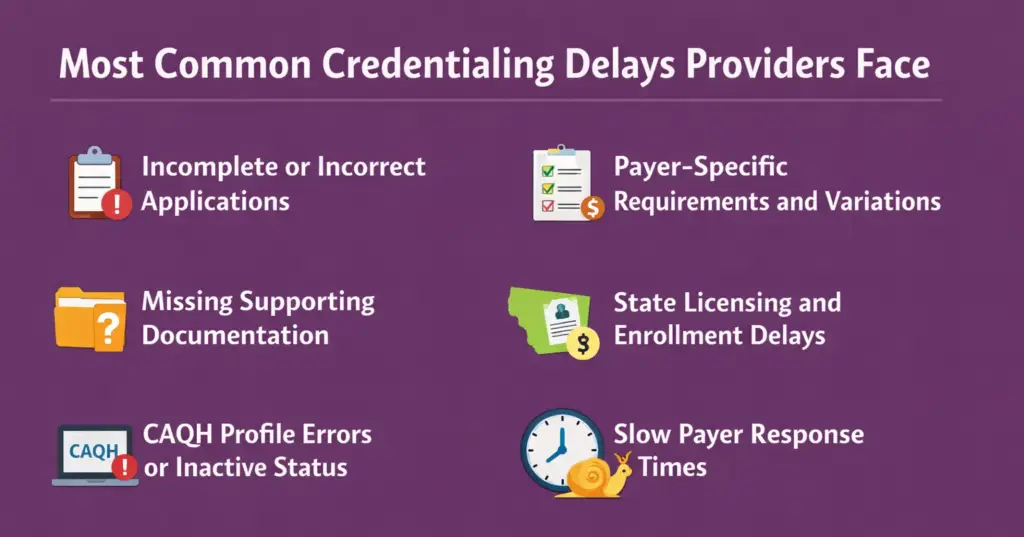
Most Common Credentialing Delays Providers Face
Medical Credentialing delays often stem from a mix of administrative errors, payer requirements, and external dependencies. Understanding the most common causes helps medical practices identify problems early, avoid repeated setbacks, and take corrective action before delays impact revenue and patient access.
Incomplete or Incorrect Applications
One of the most common causes of credentialing delays is incomplete or inaccurate applications. Missing fields, mismatched provider details, and outdated information force payers to stop processing and request corrections. Each correction restarts review cycles, extending approval timelines and delaying participation.
Missing Supporting Documentation
Credentialing requires multiple supporting documents, including active state licenses, malpractice insurance certificates, W-9 forms, and board certifications. When any document is missing, expired, or uploaded incorrectly, payers cannot complete verification. This often results in repeated follow-ups and unnecessary processing delays.
CAQH Profile Errors or Inactive Status
An unattested or outdated CAQH profile can bring credentialing to a complete halt. Payers rely on CAQH as a primary data source, and profiles that are inactive, incomplete, or not attested within required timeframes are flagged immediately. Even if applications are submitted, payers will not proceed until CAQH information is current and verified.
Payer-Specific Requirements and Variations
Each insurance payer follows its own credentialing rules, portals, and documentation standards. What works for one payer may not meet another’s requirements. Failing to follow payer-specific guidelines often leads to rejected applications, resubmissions, and extended review periods.
State Licensing and Enrollment Delays
Credentialing timelines are closely tied to state licensing and enrollment approvals. Delays at the state board level, license renewals, or Medicaid enrollment can prevent credentialing from moving forward. Payers cannot finalize approval until all state requirements are completed and confirmed.
Slow Payer Response Times
Even when applications are submitted correctly, payer backlogs and limited communication can slow progress. Some insurers take weeks to review applications or respond to follow-ups. Without consistent tracking and proactive outreach, applications can sit idle, causing avoidable delays in network participation and reimbursement.
How to Fix Common Credentialing Delays
Fixing credentialing delays requires a proactive and organized approach. Most delays are preventable when practices understand payer expectations, maintain accurate provider data, and follow up consistently. By addressing common problem areas early, healthcare providers can shorten approval timelines, reduce rework, and avoid unnecessary revenue interruptions.
Submit Complete and Accurate Applications the First Time
Submitting accurate applications from the start is one of the most effective ways to prevent credentialing delays. Missing fields, incorrect dates, or mismatched provider details often force payers to pause processing and request corrections.
Carefully reviewing each application before submission minimizes back-and-forth communication and keeps the credentialing process moving forward without interruptions.
Keep All Provider Information Consistent
Inconsistent provider data is a major cause of credentialing slowdowns. Information such as provider name, address, NPI, tax ID, and license numbers must match exactly across CAQH, NPI registry, state licenses, and payer applications. Even small discrepancies can trigger manual reviews, significantly delaying approvals.
Maintain an Updated and Attested CAQH Profile
An inactive or outdated CAQH profile can bring credentialing to a complete standstill. Payers rely heavily on CAQH to verify provider information, and profiles must be attested regularly to remain active. Keeping CAQH information current ensures payers can access verified data immediately, reducing unnecessary processing delays.
Track Applications and Follow Up Regularly
Credentialing does not move forward without consistent monitoring. Payers may not notify practices when applications stall or require additional information. Tracking submission dates, expected timelines, and payer responses allows practices to follow up at the right time and prevent applications from being overlooked or delayed indefinitely.
Prepare Payer-Specific Documents in Advance
Each insurance payer has unique credentialing requirements, forms, and documentation standards. Preparing payer-specific documents ahead of time helps avoid last-minute scrambling and missed deadlines. When practices understand insurer requirements early, they can submit complete credentialing packets without delays caused by missing or incorrect paperwork.
How Long Credentialing Delays Typically Add to Timelines
Credentialing delays can extend approval timelines depending on the type of issue and the insurance payer involved, making it harder for practices to plan cash flow and provider onboarding.
- Minor issues, such as small data inconsistencies, missing signatures, or formatting errors, may add a few weeks to the credentialing process if corrected quickly.
- Major errors, including incomplete applications, missing licenses, or unresolved compliance issues, can delay credentialing by several months.
- Commercial insurance payers generally process credentialing faster but may still experience delays due to internal backlogs or requests for additional documentation.
- Medicare and Medicaid credentialing typically takes longer and is more sensitive to accuracy, with delays often extending timelines by multiple months when corrections are required.
- Individual providers usually credential faster than group practices because fewer verification steps are involved.
- Group practices often face longer delays, as credentialing requires managing multiple provider records, shared tax IDs, and additional payer validations.
Conclusion
Credentialing delays can disrupt provider onboarding, delay reimbursements, and create unnecessary financial strain for medical practices. Most delays stem from preventable issues such as incomplete applications, outdated CAQH profiles, or missed payer-specific requirements. By understanding where delays occur and taking proactive steps to fix them early, practices can shorten approval timelines and avoid repeated setbacks.
Frequently Asked Questions
Credentialing delays can range from a few weeks to several months, depending on the severity of the issue, payer requirements, and how quickly corrections are submitted.
Yes, delays can prevent providers from billing insurance payers, leading to unpaid claims, lost revenue, and cash flow disruptions until credentialing is approved.
CAQH issues are a common cause, especially when profiles are outdated or not attested, but incomplete applications and payer backlogs also contribute to delays.
Outsourcing credentialing can significantly reduce delays by ensuring applications are accurate, tracked consistently, and followed up with payers on time.