Medical credentialing is a critical step before any provider can legally bill insurance, yet it is also one of the most time-consuming parts of practice setup. Many healthcare providers ask the same question: how long does credentialing take, and what causes delays? In this guide, we break down realistic credentialing timelines, payer-specific timeframes, and the key factors that influence approvals so you know exactly what to expect.
Table of contents
- What Is Medical Credentialing?
- Why Credentialing Timelines Matter for Your Practice
- How Long Does Credentialing Take on Average?
- Credentialing Timelines by Payer
- Factors That Affect How Long Credentialing Takes
- Common Reasons Credentialing Gets Delayed
- How to Speed Up the Credentialing Process
- Conclusion
- FAQs
What Is Medical Credentialing?
Medical credentialing is the process of verifying a healthcare provider’s qualifications so they can legally bill insurance payers. This includes validating education, training, licensure, certifications, work history, and malpractice coverage. Insurance companies and government programs require this verification before allowing providers to participate in their networks.
Credentialing is required for physicians, nurse practitioners, physician assistants, therapists, and other licensed providers. Hospitals, clinics, urgent care centers, and specialty practices must complete credentialing for each provider before submitting claims. Without proper credentialing, claims are denied regardless of the accuracy of coding or documentation.
Why Credentialing Timelines Matter for Your Practice
Credentialing timelines directly affect a practice’s ability to generate revenue. When credentialing is delayed, providers cannot bill insurance for patient visits, even if care has already been delivered. This creates payment backlogs that strain cash flow and disrupt financial planning.
Extended timelines also increase the risk of claim rejections. Services rendered before credentialing approval are often denied, leading to lost revenue that cannot always be recovered. These denials add administrative burden and force staff to spend time on appeals instead of patient care.
How Long Does Credentialing Take on Average?
On average, medical credentialing takes between 60 and 120 days, but timelines can extend longer depending on the payer, provider type, and application accuracy. Some providers receive approvals in as little as one month, while others wait six months or more before they can bill insurance.
Typical Credentialing Timeline by Provider Type
Credentialing timelines vary based on the structure and complexity of the provider enrollment.
- Individual Providers: Individual providers typically complete credentialing within 60 to 90 days. The process is usually faster because fewer records need verification. However, missing CAQH updates or state license issues can still cause delays.
- Group Practices: Group practices often experience longer timelines, ranging from 90 to 120 days. In addition to individual provider verification, payers must also credential the group entity, tax ID, and practice location. Any mismatch between provider and group information can slow approvals.
- Urgent Care and Specialty Clinics: Urgent care centers and specialty clinics may face timelines of 120 days or longer. These practices often work with multiple payers and have higher scrutiny due to service complexity. Specialty-specific documentation and payer-specific requirements can further extend the process.
Credentialing Timelines by Payer
Each insurance payer follows its own review process, which directly impacts how long credentialing takes. Understanding payer-specific timelines allows practices to plan billing and patient intake more strategically.
Medicare Credentialing Timeline
Medicare credentialing typically takes 60 to 90 days once a complete application is submitted. While Medicare offers online enrollment through PECOS, delays often occur due to missing signatures, incorrect practice addresses, or ownership disclosures. Retroactive billing may be allowed in limited cases, but approval must still be finalized first.
Medicaid Credentialing Timeline
Medicaid credentialing timelines vary by state and usually range from 90 to 120 days. Some states take longer due to additional background checks and manual reviews. State-level policy changes and enrollment backlogs can also slow approvals, making early submission essential.
Commercial Insurance Credentialing Timeline
Commercial payers such as Blue Cross Blue Shield, Aetna, Cigna, and UnitedHealthcare typically require 90 to 180 days for credentialing. These insurers conduct extensive verification and often request revalidation during the process. Delays are common when CAQH profiles are incomplete or payer follow-ups are not handled consistently.
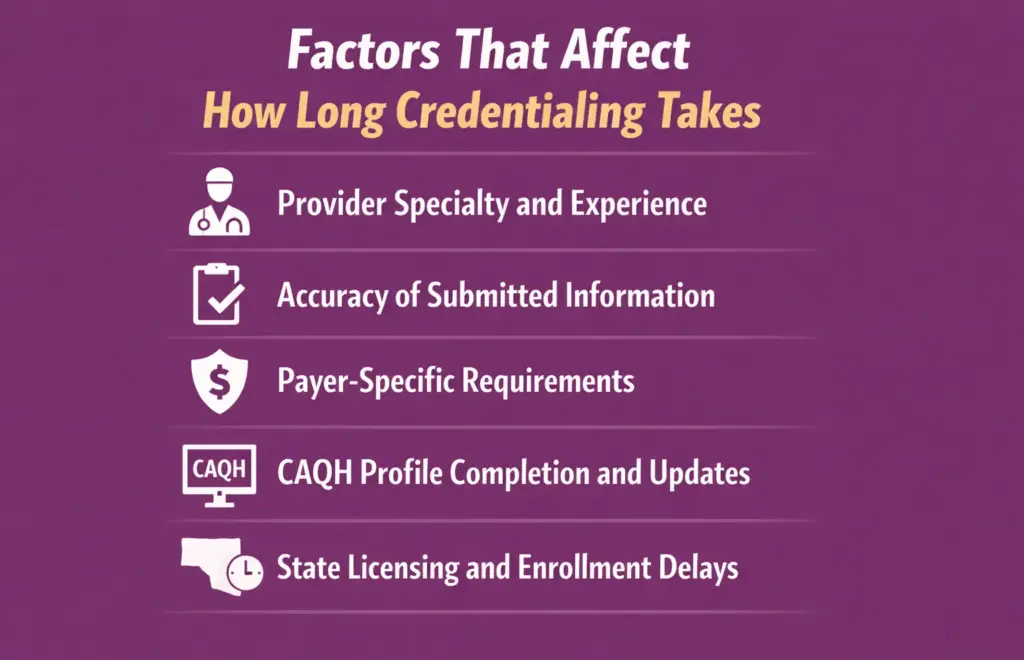
Factors That Affect How Long Credentialing Takes
Credentialing timelines are not fixed. Several variables influence how quickly a provider is approved by insurance payers. Understanding these factors helps practices reduce delays and set realistic expectations.
Provider Specialty and Experience
A provider’s specialty plays a significant role in credentialing timelines. High-risk or highly regulated specialties often undergo additional review, which can extend approval times. New providers with limited work history may also face longer verification periods compared to experienced providers with established records.
Accuracy of Submitted Information
Accurate applications move through payer review faster. Even minor errors such as name mismatches, outdated addresses, or incorrect license numbers can trigger delays. Payers frequently return applications for correction, resetting the review process and extending timelines.
Payer-Specific Requirements
Each insurance payer follows its own credentialing standards and verification process. Some require additional forms, attestations, or specialty-specific disclosures. Failing to meet payer-specific requirements often leads to prolonged reviews and multiple resubmissions.
CAQH Profile Completion and Updates
An incomplete or outdated CAQH profile is one of the most common causes of credentialing delays. Payers rely heavily on CAQH for provider data verification. Missing attestations, expired documents, or unverified information can halt progress until corrections are made.
State Licensing and Enrollment Delays
Credentialing cannot be completed without active state licenses and enrollments. Delays in license approval, renewals, or state-level enrollment directly impact credentialing timelines. This is especially common for providers practicing across multiple states.
Common Reasons Credentialing Gets Delayed
Even well-prepared applications can face setbacks. Understanding common delay triggers allows practices to address issues before they impact revenue.
Incomplete or Incorrect Applications
Applications missing required fields or containing inconsistencies are often returned for revision. Each correction restarts payer review, adding weeks or months to the credentialing process.
Missing Supporting Documentation
Payers require specific documents such as licenses, malpractice insurance, board certifications, and work history. Missing or expired documents prevent applications from moving forward until replacements are submitted and verified.
Slow Payer Response Times
Some delays are outside a provider’s control. Insurance companies may take weeks to review applications or respond to inquiries. Without proactive follow-ups, applications can remain inactive for extended periods.
Revalidation and Recredentialing Issues
Recredentialing and revalidation cycles can cause unexpected interruptions if deadlines are missed. Failure to respond to revalidation requests may result in temporary termination from payer networks, delaying reimbursements.
How to Speed Up the Credentialing Process
While credentialing cannot be rushed entirely, proactive management can significantly reduce delays and improve approval timelines.
Preparing Documents in Advance
Having all required documents ready before submission minimizes back-and-forth with payers. Current licenses, insurance certificates, and accurate work history help applications move smoothly through verification.
Keeping CAQH Profiles Updated
Regularly reviewing and attesting CAQH profiles ensures payers always access accurate information. Updated profiles reduce follow-up requests and speed up approvals across multiple payers.
Following Up With Payers Regularly
Consistent follow-ups keep applications active and prevent them from stalling. Regular communication helps identify issues early and allows quick resolution before delays escalate.
Outsourcing Credentialing to Experts
Working with credentialing professionals reduces errors and administrative burden. Experts understand payer requirements, manage follow-ups, and ensure compliance, helping practices achieve faster approvals and stable cash flow.
Conclusion
Medical credentialing timelines vary, but delays are almost always preventable with the right preparation and process. From provider specialty to payer requirements, every step impacts how quickly your practice can begin billing and receiving reimbursements. Understanding these timelines helps you plan onboarding, protect cash flow, and avoid unnecessary claim denials.
FAQs
Medical credentialing typically takes between 60 and 120 days, depending on the payer, provider type, and application accuracy. Some commercial payers may take longer, especially for specialty practices.
Providers may see patients during credentialing, but insurance claims cannot be billed until approval is complete. This often results in delayed or lost revenue if credentialing is not finalized on time.
Commercial insurers conduct extensive verification and often require CAQH validation and specialty-specific documentation. These additional review steps increase approval timelines compared to government payers.