Medical credentialing is a critical step for any healthcare practice, ensuring that providers are recognized by insurance payers and eligible for reimbursement. Yet, many practices struggle with delayed approvals, claim denials, and administrative bottlenecks, which can directly affect revenue and patient access.
In this guide, we break down proven best practices for medical credentialing, backed by industry standards and real-world experience, showing how your practice can streamline the process, stay compliant, and secure timely reimbursements without added stress.
Table of contents
What Is Medical Credentialing?
Medical credentialing is the process by which healthcare providers are verified and approved to participate with insurance payers. It ensures that providers meet professional standards, hold valid licenses, and are eligible for reimbursement from insurance companies.
Credentialing is essential not only for compliance but also for building trust with patients and payers. Without proper credentialing, practices may face claim denials, delayed payments, or even exclusion from insurance networks.
Key Terms Providers Should Know (NPI, CAQH, PECOS, Tax ID)
To navigate credentialing successfully, healthcare providers should understand these key terms:
- NPI (National Provider Identifier): A unique 10-digit number assigned to healthcare providers for identification in all standard transactions.
- CAQH (Council for Affordable Quality Healthcare): A centralized platform used to submit and manage provider information for credentialing with multiple payers.
- PECOS (Provider Enrollment, Chain, and Ownership System): A CMS system used for enrolling Medicare providers and managing their credentials.
- Tax ID (TIN/EIN): The employer identification number required for practice registration and payer contracts.
Familiarity with these terms ensures a smoother credentialing process and reduces delays caused by incomplete or inaccurate information.
Why Proper Credentialing Matters for Your Practice
Proper medical credentialing is crucial for maintaining smooth operations, protecting revenue, and ensuring patient access. A well-managed credentialing process prevents delays in reimbursements, reduces claim denials, and helps practices remain compliant with payer and regulatory requirements.
Impact on Reimbursements and Claim Denials
Credentialing directly affects your practice’s revenue cycle. Incomplete or inaccurate credentialing can result in denied claims, delayed payments, and lost revenue opportunities.
Ensuring your providers are fully credentialed with all insurance panels means claims are processed correctly the first time, improving cash flow and minimizing administrative follow-ups.
Compliance and Audit Protection
Credentialing is also a key compliance safeguard. Accurate provider verification reduces the risk of audits, fines, and penalties. By maintaining up-to-date licensure, certifications, and documentation, practices demonstrate adherence to payer and regulatory standards, protecting both the practice and its providers.
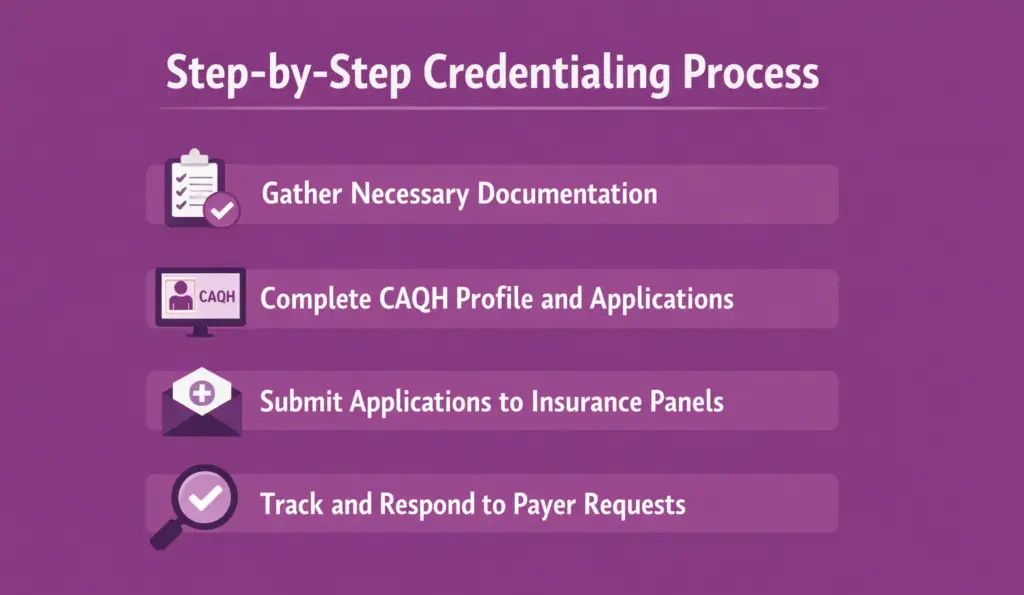
Step-by-Step Credentialing Process
A structured approach to credentialing ensures accuracy, reduces delays, and keeps your practice financially healthy. The process can be broken down into clear, actionable steps that every medical practice should follow.
Gather Necessary Documentation
Start by collecting all required documentation, including provider licenses, diplomas, board certifications, malpractice insurance, and identification details. Having complete and accurate documents ready prevents delays during application submission.
Complete CAQH Profile and Applications
Providers should complete and regularly update their CAQH profiles, which centralize credentialing information for multiple payers. Accurate profiles reduce errors and speed up the application process.
Submit Applications to Insurance Panels
Submit credentialing applications to all relevant insurance panels, ensuring that every required form and supporting document is included. Double-check for completeness to avoid rejections or resubmissions.
Track and Respond to Payer Requests
Once applications are submitted, actively track their status and promptly respond to any additional requests from payers. Timely communication prevents unnecessary delays and ensures credentialing is completed efficiently.
Best Practices to Ensure a Smooth Credentialing Process
Following best practices helps your practice complete credentialing efficiently, avoid delays, and reduce administrative headaches.
- Maintain Updated Provider Information: Keep all provider details current, including licenses, board certifications, and contact information. Regular updates ensure that applications are accurate and prevent unnecessary delays.
- Follow Payer-Specific Requirements: Each insurance payer has its own credentialing criteria and submission process. Understanding and adhering to these requirements reduces rejections and accelerates approval timelines.
- Schedule Regular Recredentialing Reviews: Credentialing isn’t a one-time process. Schedule periodic reviews and recredentialing before provider contracts expire to maintain uninterrupted network participation and payment eligibility.
- Use Credentialing Checklists and Tools: Use credentialing checklists, templates, and software tools to organize documentation, track your application progress, and complete all steps correctly.
Common Credentialing Challenges and How to Avoid Them
Even experienced practices can face obstacles during credentialing. Being aware of common challenges helps you proactively address them.
- Incomplete or incorrect documents are the leading cause of delays. Double-check that all required forms, licenses, and certifications are submitted correctly.
- Insurance payers may take time to review applications. Follow up regularly and maintain organized records to prevent unnecessary hold-ups.
- Applications can be denied due to errors or missing information. Promptly correct issues, provide supporting documentation, and track resubmissions to secure approval efficiently.
Conclusion
Effective credentialing is essential for maintaining revenue, compliance, and patient access in any medical practice. By following best practices, keeping provider information updated, adhering to payer-specific requirements, scheduling recredentialing reviews, and using credentialing tools, practices can minimize delays, reduce claim denials, and streamline their revenue cycle.
For practices looking to save time and ensure accuracy, outsourcing credentialing to experts like Practice Perfect provides peace of mind, faster approvals, and optimized reimbursements, allowing providers to focus on delivering quality patient care.
FAQs
The timeline varies depending on the payer and provider type but typically ranges from 30 to 90 days. Some complex cases or multi-provider practices may take longer.
Yes, incomplete or inaccurate credentialing can result in claim denials, delayed payments, and missed revenue opportunities. Proper credentialing ensures timely and accurate reimbursements.
Providers should review and update their information regularly, ideally before any license renewal or recredentialing cycle, to avoid delays and compliance issues.
Small to mid-sized practices often benefit from outsourcing. Credentialing experts ensure accuracy, manage payer requirements, and speed up approvals, freeing up staff to focus on patient care.