Claim denials can disrupt cash flow and create unnecessary administrative stress for healthcare practices. Denial management is the structured process of identifying, analyzing, and preventing denied claims to secure steady revenue. Without a strong denial management system, practices face delayed payments, increased operational costs, and dissatisfied patients. Understanding how denial management works is the first step toward protecting financial health.
Table of contents
Understanding Denial Management
Denial management in medical billing refers to the strategies and processes used to handle rejected or unpaid claims. It goes beyond simply resubmitting errors. Instead, it involves identifying the root cause, correcting mistakes, and preventing similar issues in the future.
Key components of denial management include:
- Identifying denials: Tracking claim rejections from payers.
- Analyzing causes: Reviewing errors in coding, eligibility, or documentation.
- Corrective action: Fixing mistakes and resubmitting claims quickly.
- Prevention: Updating workflows and staff training to avoid recurring errors.
Effective denial management ensures claims move smoothly, reducing revenue loss and strengthening long-term practice stability.
Why Denial Management Matters for Practices
Claim denials may look like minor setbacks, but their impact on practice revenue is significant. Studies show that practices lose between 5–10% of revenue due to preventable denials. This lost income adds up over time, weakening cash flow and creating additional administrative workload.
A strong Revenue Cycle Management system ensures faster claim resolution and fewer denials. Without it, practices face payment delays, higher write-offs, and wasted staff resources.
Denial management also ties closely to Accounts Receivable (AR) Recovery. When denials pile up, AR days increase, making recovery harder. By addressing denials early, practices improve AR performance and reduce lost revenue.
Common Types of Claim Denials
Denials fall into several recurring categories. Breaking them down makes it easier to design strategies for prevention.
Coding errors
Mistakes in CPT or ICD coding are among the most frequent causes of denials. Keeping codes updated and performing regular audits reduces errors.
Eligibility and coverage issues
If coverage isn’t verified, claims may bounce back. Real-time eligibility checks before appointments help prevent these denials.
Missing prior authorizations
Many services require payer approval before delivery. Without tracking systems, missing authorizations can block payments.
Timely filing denials
Payers set strict deadlines for claim submission. Delayed filings almost always result in rejections, making process discipline essential.
Documentation problems
Incomplete or missing clinical details prevent payers from validating medical necessity. Strong documentation protocols and EHR integration help avoid these losses.
📊 Table: Denial Type vs. Prevention Strategy
| Denial Type | Prevention Strategy |
|---|---|
| Coding errors | Regular coding audits, staff training, updated ICD/CPT codes |
| Eligibility & coverage issues | Real-time eligibility verification before patient visit |
| Missing prior authorizations | Automated tracking systems with reminders |
| Timely filing denials | Claim submission workflows with payer deadline alerts |
| Documentation problems | Strong provider documentation protocols, EHR integration |
How Denial Management Works
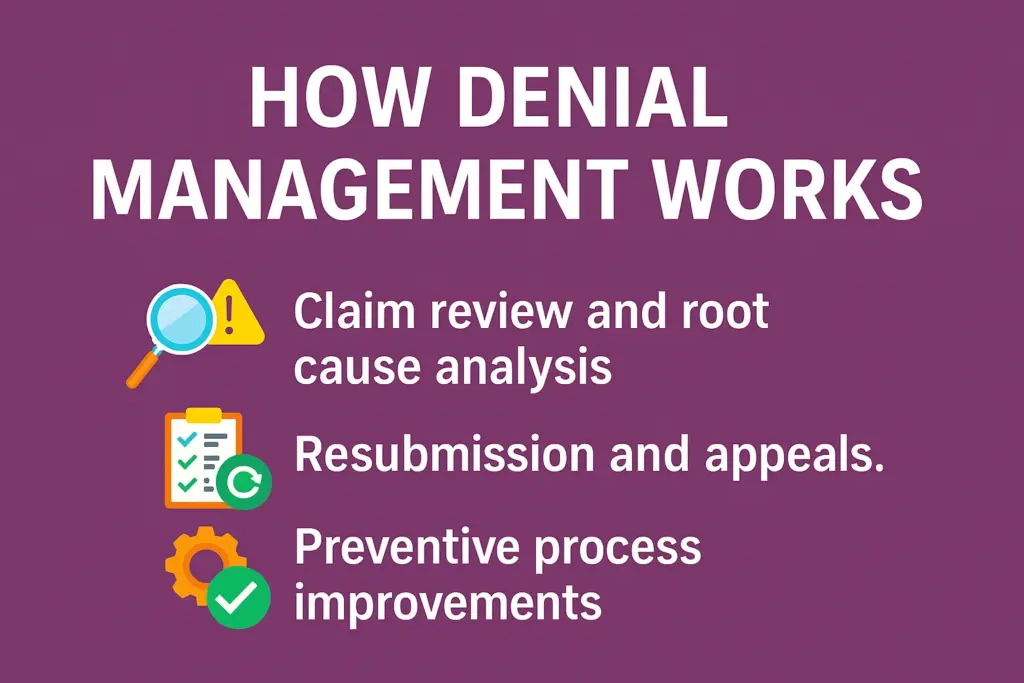
Denial management is more than just fixing rejected claims. It is a structured process that identifies the reason for denials, corrects them, and creates long-term solutions to prevent recurrence. A strong denial management system follows three core steps:
Claim review and root cause analysis
Each denied claim is carefully reviewed to identify the exact cause, whether it’s coding errors, eligibility issues, or missing documentation. Understanding these root causes helps practices prioritize high-impact corrections.
Resubmission and appeals
Once corrected, claims are resubmitted with the necessary documentation. In some cases, payers require a formal appeal process, which involves gathering clinical records, authorization letters, or additional coding details. A dedicated appeals workflow ensures faster recoveries.
Preventive process improvements
The final step is preventing denials from happening again. Data from denial patterns is analyzed and shared with staff to build stronger workflows, such as better eligibility verification or stricter coding checks.
Best Practices for Effective Denial Management
Strong denial management requires a balance of skilled staff, technology, and process discipline. Below are the best practices every practice should follow:
Accurate coding and credentialing
Coding errors and credentialing gaps are major drivers of denials. Partnering with experts ensures CPT/ICD codes are current and providers are properly credentialed with payers.
Real-time eligibility checks
Verifying insurance coverage before services are provided prevents eligibility-related denials. Automated eligibility systems integrated with EHRs make this process seamless.
Authorization tracking
Missing prior authorizations can delay thousands of dollars in revenue. Practices should implement tracking systems with automated reminders to secure approvals before treatment.
Strong documentation support
Payers require detailed records to justify medical necessity. Clear provider documentation and ongoing staff education reduce errors. For further guidance, practices can review CMS medical necessity guidelines.
Partnering With Experts for Denial Management
While internal teams can handle some denial issues, many practices benefit from working with a specialized billing partner. The right partner brings experience, advanced tools, and measurable results.
What to look for in a partner:
- Denial rate percentage — should consistently stay below 5–7%.
- Days in AR — a strong partner helps reduce outstanding claims to under 30 days.
- First-pass resolution rate — over 90% is a benchmark for efficient billing.
By outsourcing denial management, practices gain access to dedicated teams, payer-specific expertise, and advanced reporting dashboards that strengthen overall Revenue Cycle Management. If your practice is exploring long-term growth, you can talk to a medical billing expert to see how professional support can reduce denials and secure steady cash flow.
Conclusion
Denial management in medical billing is more than fixing rejected claims—it’s about preventing them through accurate coding, eligibility verification, and compliance with CMS medical necessity guidelines. When handled proactively, denial prevention reduces revenue leakage, speeds up reimbursements, and creates a more stable financial foundation for practices. Partnering with the right billing experts ensures these strategies are consistently applied, helping your practice focus on patient care while keeping revenue protected.
FAQs
Denial management covers claim review, root cause analysis, appeals, resubmissions, and long-term process improvements to reduce future denials.
On average, claim denials can cause a 5–10% revenue loss if not managed properly.
Yes. Denial management focuses on preventing and resolving claim denials, while AR recovery deals with collecting payments from outstanding accounts receivable. Both work together to maximize revenue.
Small practices can manage some denials internally, but outsourcing often provides access to advanced tools, expertise, and payer relationships that reduce costs and improve results.