A patient checks in for a 10 am visit. Your team scans the card, the visit goes well and the claim goes out that afternoon. Three weeks later it comes back denied. The plan ended last month and nobody knew.
That is the problem insurance eligibility verification is meant to prevent. It is the check you do before the visit to confirm the patient’s plan is active and to learn what it covers. It takes a few minutes per patient. Skipping it can cost you the whole payment, plus the time spent chasing a patient for a bill they did not expect.
This guide walks through what to check, when to check it, what to ask when you call a payer and how to explain the result to the patient. You can print the checklist and hand it to your front desk.
What insurance eligibility verification tells you
Verification answers one question: will this plan pay for this visit, and how much will the patient owe? A good check covers four things.
- Whether the plan is active on the date of service, including its start date and any end date.
- What the patient pays: copay, deductible and coinsurance.
- Whether your practice and the treating provider are in network.
- Any limits, such as a cap on visits, and whether the service needs approval beforehand.
You can get this from the payer’s website, by phone or electronically. The electronic route uses a standard request and reply between providers and health plans, known as the 270/271 transaction. The US Department of Health and Human Services adopted it as a HIPAA standard, and many practice management systems and clearinghouses can send it for you. When people talk about real time insurance eligibility verification, this is what they mean. You send the request and the plan’s answer comes back in moments, instead of after a phone call and a wait on hold.
One thing to keep in mind: verification is a snapshot. It tells you what the plan says today, not what it will pay once the claim is reviewed. Plan rules, other claims and later changes can still affect the final payment.
When to check
Many practices check one to three days before the appointment. That leaves time to call the patient if their plan ended or if you need a different card. A second quick check at check in catches last minute changes.
Some patients need extra care:
- New patients, since you have no history with their plan.
- Returning patients, because coverage can change when someone switches jobs or a plan year renews. Do not assume last visit’s result still holds.
- Anyone who hands you a new card. Treat them like a new patient.
- Planned procedures. Check the benefits for that service, not just general coverage.
A checklist for your front desk
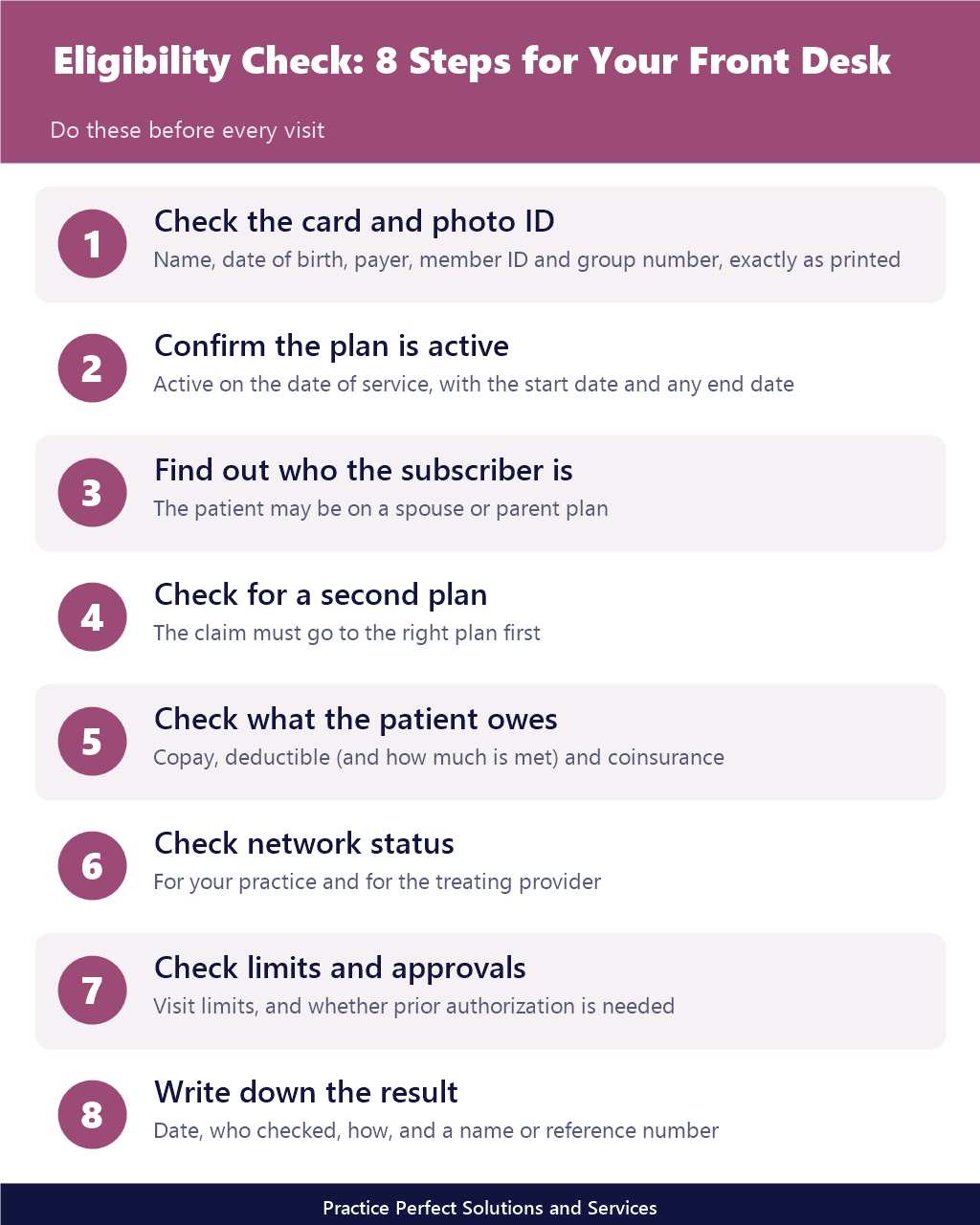
- Start with the card and photo ID. Copy the name, date of birth, payer name, member ID and group number exactly as printed. A typo here can cause a rejection that has nothing to do with coverage.
- Confirm the plan is active on the date of service. Note the start date and any end date.
- Find out who the subscriber is. The patient may be a child or spouse on someone else’s plan. The subscriber’s details must match what goes on the claim.
- Check for a second plan. If the patient has two, the claim has to go to the right one first. Ask the patient, and ask the payer whether another plan is on file.
- Check what the patient owes. That means the copay, the deductible and how much of it is already met, and the coinsurance.
- Check network status for your practice and for the treating provider.
- Check limits and approvals. Ask about visit limits and whether the service needs prior authorization.
- Write it down. Record the date, who checked, how they checked (portal, phone or electronic) and the name or reference number if you called. If a claim is denied later, this record shows what you were told.
What to ask when you call the payer
Phone calls go faster when you have the questions ready. Keep this list next to the phone.
- Is the policy active on the date of service, and what is the start date?
- Is there an end date coming up?
- Is our practice, and this provider, in network?
- What is the copay for this type of visit?
- What is the deductible, and how much has been met?
- What is the coinsurance for this service?
- Is there a limit on the number of visits?
- Does this service need prior authorization?
- Is there any other insurance on file for this patient?
- Can I have your name and a reference number for this call?
How to read the plan’s answer
Insurance terms confuse patients and sometimes staff. Here is what they mean in plain words.
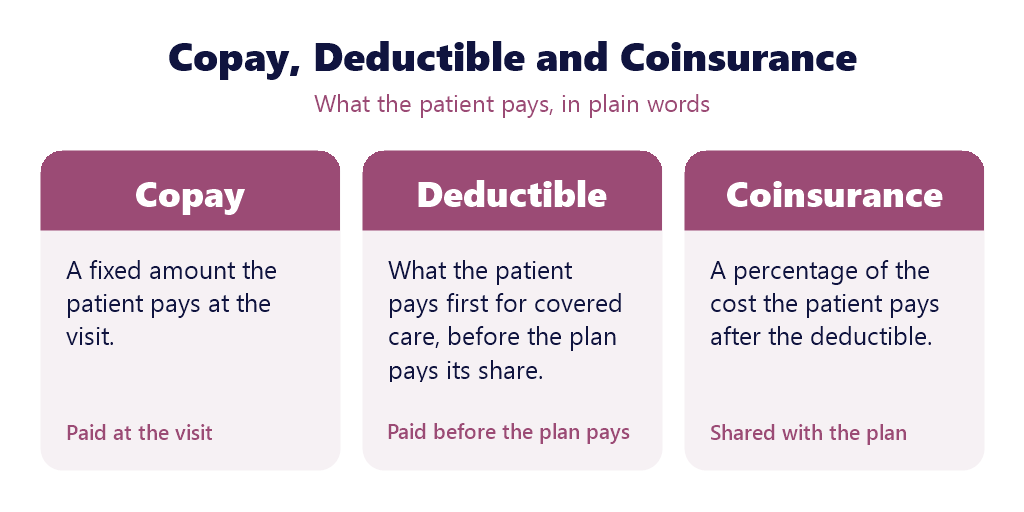
- Copay: a fixed amount the patient pays at the visit.
- Deductible: what the patient pays for covered care before the plan starts paying its share. If part of it has been met, the patient has already paid that part this plan year.
- Coinsurance: a percentage of the cost the patient pays after the deductible.
- Inactive plan: the payer will not pay for this visit. Stop and ask the patient for current insurance details.
- Out of network: the plan may pay less, or nothing. The patient should hear this before the visit, not after.
What to tell the patient before the visit
Patients get upset about bills they did not see coming. A short call or message avoids most of it.
- Tell them what you expect them to pay, and say it is an estimate.
- If the deductible has not been met, tell them they may owe more than the copay.
- If the plan is inactive, ask for new insurance details now, while there is time to fix it.
- Collect the copay at check in.
Where eligibility checks go wrong
- Trusting the card alone. A card does not show whether the plan is still active.
- Checking once and never again. A plan that was active in January may not be active in June.
- Missing a second plan. The claim goes to the wrong payer first and gets sent back.
- Skipping the approval check. A service that needed prior authorization is denied even though the plan was active.
- Not keeping a record. When the payer says one thing and the claim says another, you have nothing to show.
These are some of the claim errors that stop clean claims, and most of them can be caught at the front desk.
Doing it yourself or getting help
A good routine is not complicated. The hard part is keeping it up when the schedule is full. If your team cannot check every patient every time, you have two choices: block time in the day for it, or hand it to someone else.
Our insurance verification services check coverage and benefits before the visit, so denials and surprise patient balances are less likely. If you are not sure where your claims are getting stuck, the free audit page is a good place to start. We review your claims and show where payments are held up.
Common questions
How far ahead should I verify?
One to three days before the appointment is common. It gives you time to fix a problem before the patient arrives.
Does a successful check guarantee payment?
No. It shows coverage and benefits at that moment. The payer still reviews the claim when it arrives.
What if the plan is inactive on the day of the visit?
Ask the patient for other insurance details. If they have none, follow your practice’s policy, which might be to reschedule or to discuss self pay.
Do I need to check every visit for the same patient?
Not always. Some practices recheck at the start of each month and any time the patient reports a change. Whatever routine you pick, write it down and use it for every patient.