Insurance credentialing is a critical step for therapists who want to work with insurance companies, grow their client base, and receive timely reimbursements. This guide explains what insurance credentialing for therapists involves, how the process works, and the common challenges that can delay approvals. With extensive experience supporting healthcare providers and therapy practices nationwide, Practice Perfect understands the payer requirements, documentation standards, and compliance rules that impact successful credentialing.
Table of contents
- What Is Insurance Credentialing for Therapists?
- Why Insurance Credentialing Is Important for Therapists
- Step-by-Step Insurance Credentialing Process for Therapists
- Common Challenges in Therapist Credentialing
- Tips to Speed Up Therapist Credentialing
- When to Outsource Insurance Credentialing
- Conclusion
- FAQs
What Is Insurance Credentialing for Therapists?
Insurance credentialing is the process that allows therapists to become approved providers with insurance companies. When you are credentialed, insurers recognize you as a qualified professional and agree to reimburse your services based on contracted rates. For therapy practices, credentialing is essential because it opens access to insured patients, reduces payment delays, and supports steady revenue.
How Credentialing Works
The credentialing process starts with gathering your professional and practice information, such as licenses, education, and work history. This information is submitted to insurance payers, who verify your credentials and review your application for compliance with their requirements. Once approved, you are added to the insurer’s provider network and can begin billing for covered therapy services. The process often takes several weeks or months and requires careful follow-up to avoid delays.
Key Terms Therapists Should Know (NPI, Tax ID, CAQH, PECOS, etc.)
Understanding common credentialing terms makes the process easier. An NPI (National Provider Identifier) is a unique number used to identify you in healthcare transactions. A Tax ID links your practice to financial and tax records. CAQH is an online system where therapists store and maintain credentialing information for multiple payers. PECOS is used for enrollment with Medicare. Knowing these terms helps therapists complete applications accurately and communicate clearly with insurance companies.
Why Insurance Credentialing Is Important for Therapists
Insurance credentialing plays a direct role in the financial health and long-term growth of a therapy practice. It allows therapists to accept insurance plans, reach more patients, and receive consistent payments for services. Credentialing also strengthens professional credibility, helping therapists build trust with both patients and payers while reducing billing issues and claim delays.
Expanding Your Client Base
When you are credentialed with insurance companies, your services become accessible to patients who rely on insurance coverage for therapy. This significantly increases the number of patients who can choose your practice, especially those who may not be able to pay fully out of pocket. Being in-network helps therapists maintain a steady flow of appointments and reduces cancellations related to cost concerns.
Increased Reimbursements and Reduced Out-of-Pocket Costs
Credentialing allows therapists to bill insurance at agreed-upon rates, leading to more predictable reimbursements. Patients benefit as well, since insurance coverage lowers their out-of-pocket expenses. This balance improves payment reliability for the practice while making therapy services more affordable and sustainable for patients.
Practice Credibility and Trust
Insurance companies only credential providers who meet specific professional and compliance standards. Being credentialed signals credibility and professionalism to both patients and referral sources. It reassures patients that they are receiving care from a verified provider and helps strengthen the reputation of your therapy practice.
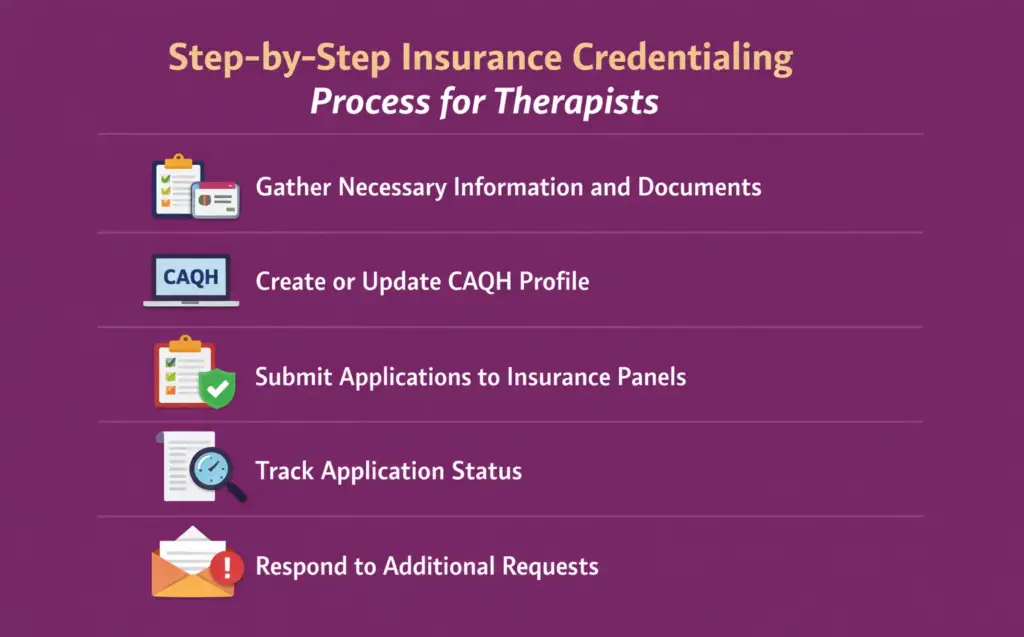
Step-by-Step Insurance Credentialing Process for Therapists
Understanding each step of the credentialing process helps therapists avoid delays and submit accurate applications. While the process can be time-consuming, a structured approach makes it more manageable and reduces the risk of errors.
Gather Necessary Information and Documents
Start by collecting all required documents, including professional licenses, certifications, education history, liability insurance, and practice details. Having complete and accurate information ready prevents application delays and reduces back-and-forth with payers.
Create or Update CAQH Profile
Your CAQH profile serves as a central database for credentialing information. Therapists must ensure their profile is fully completed, current, and regularly attested. Many insurance companies pull information directly from CAQH, so accuracy is critical.
Submit Applications to Insurance Panels
Once your information is prepared, applications are submitted to the insurance panels you want to join. Each payer has its own requirements and timelines, so careful attention is needed to meet specific guidelines and submission formats.
Track Application Status
After submission, applications must be actively monitored. Insurance companies may take weeks or months to process credentialing requests, and regular follow-ups help prevent applications from being overlooked or delayed.
Respond to Additional Requests
Payers often request clarification or additional documentation during the review process. Responding promptly and accurately to these requests keeps the process moving and improves the chances of timely approval.
Common Challenges in Therapist Credentialing
Therapist credentialing can be frustrating, especially for providers balancing clinical responsibilities with administrative tasks. Many delays and denials happen due to avoidable issues that disrupt cash flow and slow practice growth. Below are the most common challenges therapists face during the credentialing process:
- Incomplete or Inaccurate Documentation
Missing licenses, outdated insurance certificates, or inconsistent practice details can cause applications to be delayed or rejected. Even small errors may require resubmission and restart the review timeline. - Time-Consuming Process
Credentialing often takes several weeks or months, with long payer response times and limited status updates. Managing follow-ups while seeing patients can quickly become overwhelming for therapists. - Payer-Specific Requirements
Each insurance company has its own rules, forms, and timelines. Keeping up with different documentation standards and submission methods increases the risk of mistakes. - Credentialing Denials and Rejections
Applications may be denied due to incomplete data, licensing issues, or network limitations. Denials require appeals or resubmissions, which can further delay insurance participation and revenue.
Tips to Speed Up Therapist Credentialing
While insurance credentialing takes time, therapists can reduce delays by following proven best practices. A proactive and organized approach helps applications move through payer reviews more efficiently and minimizes unnecessary back-and-forth.
Keep Your CAQH Profile Updated
Ensure your CAQH profile is complete, accurate, and regularly attested. Outdated licenses, expired insurance, or missing practice details can immediately stall the credentialing process. Regular updates help payers verify your information without delays.
Use Credentialing Checklists
Credentialing checklists help therapists track required documents and submission steps for each payer. Having a checklist reduces errors, ensures nothing is missed, and keeps the process consistent across multiple insurance panels.
Follow Up Regularly With Payers
Insurance companies rarely provide frequent updates. Regular follow-ups help confirm receipt of applications, identify missing items early, and prevent applications from being overlooked in long processing queues.
Avoid Common Application Mistakes
Small errors such as mismatched addresses, incorrect Tax IDs, or incomplete work history can cause rejections. Carefully reviewing applications before submission saves time and avoids unnecessary resubmissions.
When to Outsource Insurance Credentialing
For many therapists, managing credentialing internally becomes challenging as the practice grows or administrative demands increase. Outsourcing credentialing can provide relief while improving approval timelines.
Signs You Should Get Credentialing Support
Therapists may benefit from credentialing support if applications are repeatedly delayed, denials are increasing, or administrative work is interfering with patient care. New practices or providers expanding into multiple insurance networks often need additional help.
Benefits of Outsourcing for Therapist Practices
Outsourcing credentialing reduces administrative burden and improves accuracy. Experienced credentialing teams manage submissions, follow-ups, and compliance requirements, allowing therapists to focus on patient care while maintaining steady insurance participation and revenue flow.
Conclusion
Insurance credentialing is a vital step for therapists who want to grow their practice, expand patient access, and maintain consistent reimbursements. While the process can be complex and time-consuming, understanding each step and avoiding common mistakes makes it far more manageable. With the right approach and expert support, therapists can stay compliant, reduce delays, and focus on delivering quality care while their credentialing process runs smoothly in the background.
FAQs
The credentialing process typically takes 60 to 120 days, depending on the insurance payer and the accuracy of the submitted information. Some panels may take longer due to internal review timelines.
In most cases, therapists cannot bill insurance until credentialing is approved. Some practices may see patients as self-pay during this time, depending on payer rules.
Yes, most insurance companies require an active and up-to-date CAQH profile. It allows payers to access your credentialing information quickly and reduces paperwork.
Yes, insurance credentialing requires periodic revalidation, usually every two to three years, to ensure licenses, insurance, and practice details remain current.