Medical coding is the backbone of the medical billing process, yet it is often misunderstood or overlooked by healthcare providers. Every diagnosis, procedure, and service you deliver must be accurately coded before a claim can be processed and paid. When coding is done correctly, it leads to clean claims, timely reimbursements, and fewer denials. When it is not, even the best-run practices face revenue losses and compliance risks.
In this blog, we explain what coding in medical billing really means, how it works, and why accurate medical coding is essential for protecting your revenue, staying compliant, and keeping your practice financially healthy.
Table of contents
- What Is Medical Coding in Medical Billing?
- Why Medical Coding Is Important for Healthcare Providers
- How Medical Coding Impacts the Medical Billing Process
- Common Medical Coding Errors and Their Consequences
- Best Practices for Accurate Medical Coding
- When to Outsource Medical Coding Services
- Conclusion
- FAQs
What Is Medical Coding in Medical Billing?
Medical coding is the process of translating healthcare services, procedures, diagnoses, and treatments into standardized codes that insurance payers use to process claims. It ensures that every patient encounter is documented accurately, allowing providers to submit claims that meet payer requirements. Without proper coding, even valid services can be denied or delayed, which can impact reimbursements and practice revenue.
How Medical Coding Works
When a patient receives care, the provider documents diagnoses, procedures, and services in the medical record. Medical coders then review these records and assign the correct codes using standardized coding systems. These codes are submitted on insurance claims, enabling payers to understand what services were provided and ensuring the provider is reimbursed appropriately. Proper coding bridges the gap between clinical documentation and financial reimbursement.
Common Types of Medical Codes Used in Billing
Medical billing relies on three primary code sets:
- ICD-10 Codes (International Classification of Diseases): Used to describe patient diagnoses and medical conditions.
- CPT Codes (Current Procedural Terminology): Used for documenting medical procedures, surgeries, and services provided by healthcare professionals.
- HCPCS Codes (Healthcare Common Procedure Coding System): Used for supplies, durable medical equipment, and services not covered by CPT codes.
Understanding and using these codes correctly is essential for accurate claim submission, preventing denials, and maintaining compliance with payer and regulatory requirements.
Why Medical Coding Is Important for Healthcare Providers
Medical coding is more than administrative paperwork—it is critical to the financial and operational health of a medical practice. Accurate coding directly affects reimbursement, compliance, and the efficiency of the revenue cycle.
Accurate Reimbursements and Faster Payments
When codes match the services provided and meet payer requirements, claims are processed efficiently, leading to faster payments. Accurate coding ensures practices are reimbursed fairly for every service delivered.
Reduced Claim Denials and Rejections
Incorrect, missing, or inconsistent codes are among the top reasons claims are denied. Proper coding reduces rejections, minimizes resubmissions, and prevents revenue loss caused by delayed payments.
Compliance With Payer and Regulatory Requirements
Medical coding ensures compliance with insurance payer rules, federal regulations, and industry standards. Accurate coding reduces the risk of audits, fines, or penalties, protecting your practice from legal and financial consequences.
How Medical Coding Impacts the Medical Billing Process
Medical coding is the bridge between clinical documentation and financial reimbursement. Accurate coding ensures that claims reflect the exact services provided, directly affecting a practice’s revenue cycle. By understanding the role of coding in billing, providers can improve payment accuracy, reduce rework, and maintain a healthy cash flow.
Coding’s Role in Claim Submission
Medical codes translate clinical services into a standardized language that payers understand. Each claim submitted to an insurance company relies on correct codes to communicate what care was provided. Accurate coding ensures that claims are processed correctly and reduces the chances of rejections due to misinterpretation.
Preventing Underbilling and Overbilling
Proper coding protects practices from revenue loss caused by underbilling, while also preventing overbilling, which can trigger audits and penalties. By assigning the correct CPT, ICD-10, and HCPCS codes, practices ensure they are reimbursed fairly for every service rendered.
Supporting Clean Claims and First-Pass Acceptance
Clean claims are those that are accurate, complete, and comply with payer rules. Accurate medical coding is the backbone of clean claims. When claims are coded correctly, they are more likely to be accepted on the first submission, reducing delays and administrative effort in resubmissions.
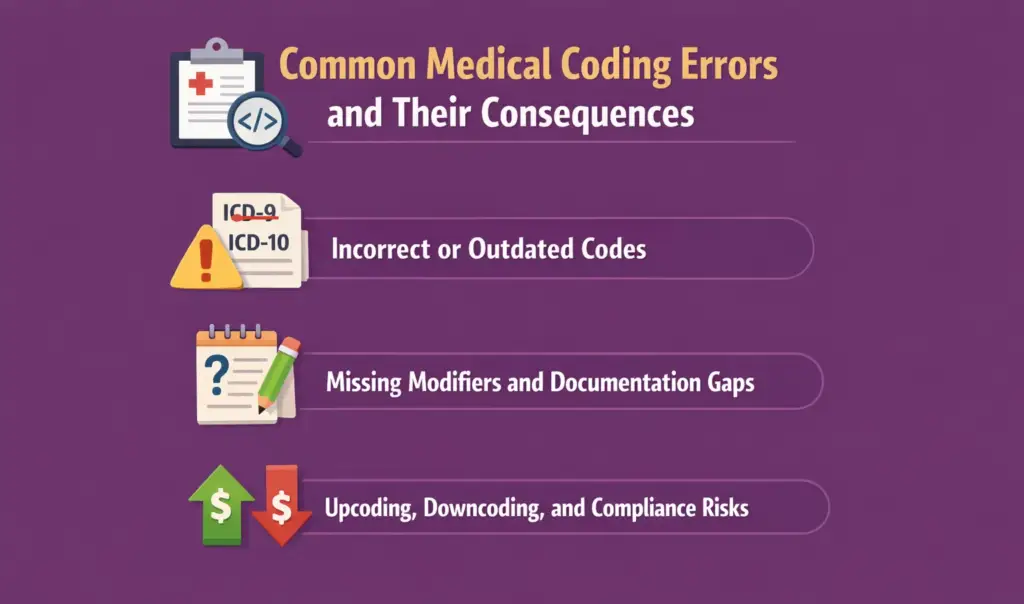
Common Medical Coding Errors and Their Consequences
Even minor coding errors can create significant challenges for medical practices. Mistakes not only delay reimbursements but also increase administrative workload and expose the practice to compliance risks. Understanding the most frequent coding errors can help providers avoid them and maintain a smooth revenue cycle.
Incorrect or Outdated Codes
Using codes that are outdated, retired, or simply incorrect can result in denied claims. Providers may also face payment delays while corrections are submitted, which impacts cash flow and operational efficiency.
Missing Modifiers and Documentation Gaps
Modifiers provide additional context for procedures and services. Failing to include them or omitting required supporting documentation can trigger denials or reduce the amount reimbursed. Proper documentation is essential to validate every claim.
Upcoding, Downcoding, and Compliance Risks
Upcoding (assigning a higher-level code than warranted) and downcoding (assigning a lower-level code) are common errors that carry serious consequences. Payers may flag these errors as fraudulent or abusive, leading to audits, fines, or clawbacks. Maintaining accurate coding protects the practice from legal and financial penalties.
Best Practices for Accurate Medical Coding
Accurate medical coding is essential for clean claims, timely reimbursements, and regulatory compliance. Implementing best practices ensures that your billing process is efficient, reduces denials, and safeguards your practice from financial or legal risks.
Staying Updated With Coding Changes
Medical coding standards, including ICD-10, CPT, and HCPCS codes, are updated regularly. Staying current with these changes prevents outdated or incorrect coding that could trigger claim denials or audit issues. Subscribing to coding updates and participating in continuing education helps maintain accuracy.
Proper Clinical Documentation
Clinical documentation must clearly support every code submitted. Detailed and accurate records ensure that procedures, diagnoses, and services are represented correctly, reducing the risk of claim rejections and compliance problems.
Regular Coding Audits and Reviews
Performing routine coding audits helps identify errors, trends, and areas for improvement. Regular reviews ensure that coding is consistent, accurate, and aligned with payer guidelines, ultimately improving first-pass claim acceptance rates.
Training and Certification for Coders
Certified coders bring expertise and reliability to your billing process. Continuous training ensures that coders are familiar with updates, payer requirements, and best practices, reducing errors and enhancing overall revenue cycle performance.
When to Outsource Medical Coding Services
Outsourcing medical coding can be a strategic choice for practices aiming to improve accuracy, efficiency, and revenue. Consider external coding support when your practice experiences:
- High claim denial rates due to coding errors
- Lack of in-house certified coding expertise
- Rapid practice growth or increasing patient volume
- Frequent updates in coding guidelines or payer rules
- Need for consistent compliance with audits and regulatory standards
Conclusion
Medical coding is the backbone of accurate billing, clean claims, and timely reimbursements. Mistakes or outdated codes can lead to denied claims, delayed payments, and compliance risks that impact your practice’s revenue. By following best practices, maintaining proper documentation, and keeping coders trained and certified, practices can streamline their billing process and protect revenue.
FAQs
Medical coding translates diagnoses and procedures into standardized codes, while medical billing uses these codes to create claims and submit them to insurance payers for reimbursement.
Certified medical coders, either in-house or outsourced, review clinical documentation to assign accurate ICD-10, CPT, and HCPCS codes for claim submission.
Accurate coding ensures claims reflect the exact services provided, reducing denials, speeding payments, and maximizing reimbursement for each patient encounter.
Outsourcing can save time, reduce errors, and improve claim acceptance rates, especially for practices lacking in-house certified coders or dealing with frequent payer updates.